Beef Basics
Bruno’s goal: help you buy beef with confidence, avoid label tricks,
and cook it so it tastes expensive—even when it isn’t.
USDA Inspection vs USDA Grading (two different things)
USDA inspection is about safety and is required for meat sold in interstate commerce.
USDA grading is about quality (tenderness/juiciness/flavor) and is voluntary—companies pay for it.
So when you see “USDA Prime/Choice/Select,” you’re looking at a quality grade, not just inspection.
The 3 grades you’ll see most
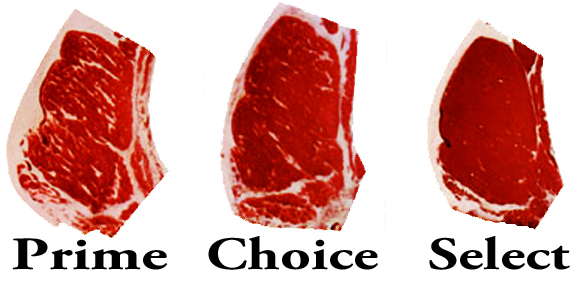
Marbling (those fine white streaks of fat inside the meat) is a big driver of tenderness and flavor.
USDA Prime
The top grade. Abundant marbling, very tender, very juicy—priced accordingly.
Often found in steakhouses and specialty butchers.
USDA Choice
The most common “good beef” in supermarkets. Moderate marbling,
reliable flavor, generally tender if cooked correctly.
USDA Select
Leanest of the three, with the least marbling—can eat dry if cooked like a Prime steak.
Better for marinating, braising, or slicing thin.
Bruno note:
If you don’t see a USDA grade on the package or sign, it doesn’t automatically mean “Select.”
It may be ungraded (common, because grading is optional).
Label tricks people fall for
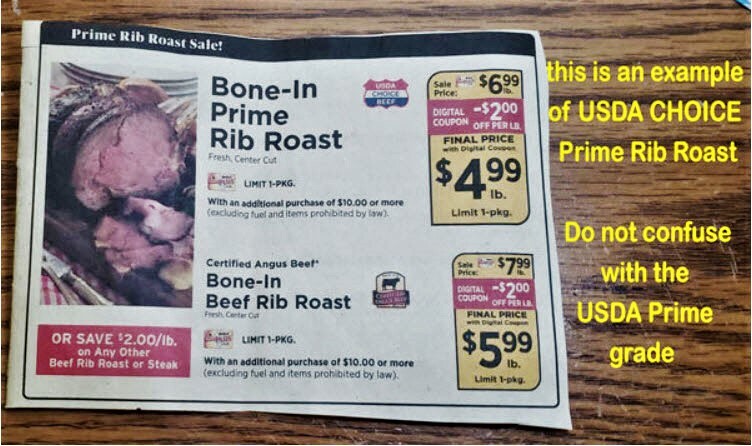
“Prime Rib” does NOT mean USDA Prime
A roast can be called prime rib because it comes from the rib/prime-rib style cut—not because it’s USDA Prime grade. It can be Prime, Choice, or Select. USDA labeling guidance explicitly notes “Prime Rib” items
aren’t required to come from USDA Prime carcasses.
What to do: look for the actual grade words: USDA Prime / USDA Choice / USDA Select.
Aging: dry-aged vs wet-aged (and the home version)
Wet-aged
Most supermarket beef is wet-aged—vacuum packed and aged in its own juices.
It becomes more tender, with a clean beef flavor.
Dry-aged
Dry-aged beef is aged in controlled open air. It concentrates flavor (nutty/“funky”), but it costs more because
of time and trimming loss.
Bruno’s home approach (simple + safe)
Home cooks can mimic the tenderizing benefit with a short “rest” in the coldest part of the fridge, still sealed in its package, for a couple of days (as long as it stays within the “use by” date and smells clean when opened).
That gives enzymes time to soften the muscle fibers—especially useful for leaner cuts.
Choose the cut by the cooking method (this saves money)
Dry heat (hot + fast): ribeye, strip, tenderloin, sirloin
Best when you want steak texture.
Braising (low + slow): chuck, brisket, short ribs
Best value. Turns “tough” into “wow.”
Thin-slice / quick sauté: top round, bottom round
Great for stir-fry, steak sandwiches, cutlets—especially with a quick marinade.
Portioning + freezing (RSW cost-control move)
If a cut is on special, buy it—then portion it like a pro:
slice into 4–8 oz portions
wrap or bag flat for quick freezing
label: cut + date + intended use (“stir-fry,” “taco beef,” “braise”)
This keeps beef “ready-to-cook” instead of becoming freezer mystery meat.
About “room temperature steak”
For more even cooking, take steaks out of the fridge 20–30 minutes before cooking (thicker steaks need a bit longer). Keep it covered, and don’t leave meat sitting out for extended periods. Pat dry before searing for better browning.
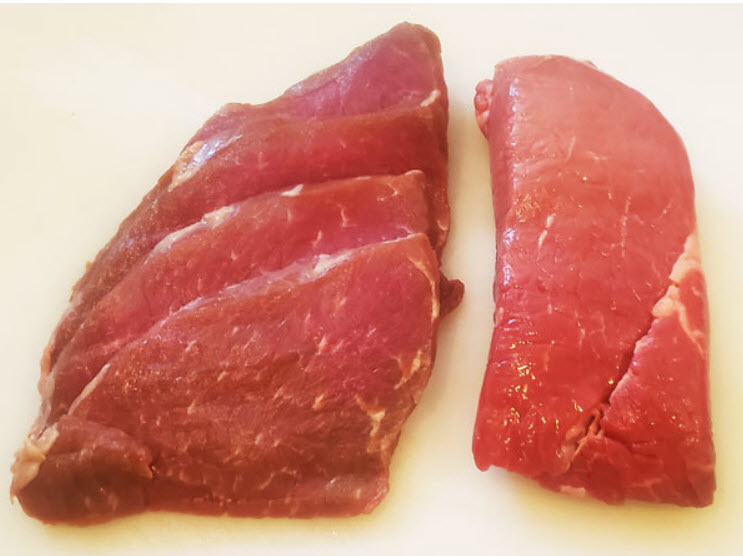
Choice top round, portioned for the freezer: ready for quick sears, stir-fries, and sandwich steaks—proof that smart prep beats expensive cuts.
Here are some samples of advertising.
:
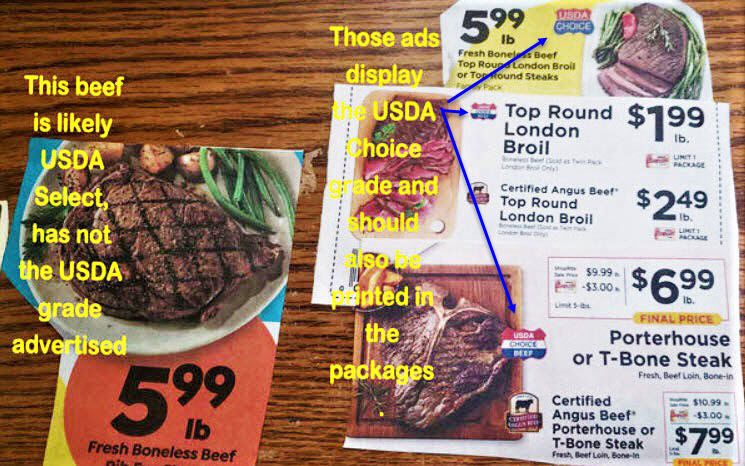


Some beef cuts are advertised as "prime rib, "
referring to the prime cut of beef and not the USDA PRIME grade.
So, they are offering USDA Choice of the beef prime rib cut, not to confuse with the
USDA PRIME grade of the same cut of meat.

.Questions and comments are welcomed.
Bruno